Woven PP vs. Non Woven: Understanding the Heavy-Duty Alternative
For many businesses, standard non woven bags provide the right balance of cost and performance. But certain applications demand more—the ability to carry 50 pounds of hardware, to resist punctures from sharp-edged products, to withstand outdoor storage for months, or to contain abrasive materials like sand or seed. In these cases, woven polypropylene bags are the superior choice. At Wenzhou Shuyou Packaging, we manufacture both non woven and woven PP bags, and we help clients select the right material for their specific needs. This guide explains the properties of woven PP, its advantages over non woven, and the applications where it excels.
What Is Woven Polypropylene?
Woven polypropylene fabric is created by extruding polypropylene into flat tapes, which are then woven on looms similar to those used for traditional textiles. The tapes interlace in an over-under pattern, creating a grid-like structure with exceptional strength in both directions. The resulting fabric is similar to the material used for bulk sandbags, grain bags, and construction debris bags, but our woven PP bags are finished with hems, handles, and closures for reusable retail and industrial applications.
The weaving process offers several advantages over non woven production. The oriented polypropylene tapes have high tensile strength because the polymer chains are aligned during extrusion. The woven structure distributes loads across multiple tapes, so a tear in one tape does not propagate across the bag. The fabric can be engineered for specific strength requirements by adjusting tape width, denier, and weave density.
Key Differences Between Woven and Non Woven PP
The most obvious difference is appearance. Woven PP has a visible grid pattern, similar to burlap but smoother and more uniform. Non woven PP has a felt-like, random fiber appearance. More importantly, the performance characteristics differ significantly.
Woven PP offers much higher tensile strength and tear resistance. A woven PP bag can safely hold 50 to 100 pounds or more, depending on construction. Non woven bags typically max out around 30 pounds. Woven PP is also more puncture-resistant; sharp corners or edges are less likely to penetrate the dense weave. Non woven fabric can be punctured more easily.
Non woven PP, however, is lighter and softer to the touch. It drapes better and folds more compactly. It also prints more sharply because the surface is smoother. Non woven is generally less expensive per bag for equivalent size, though the cost difference narrows for heavy-duty woven constructions.
For applications where strength, puncture resistance, and durability are the primary concerns, woven PP is the clear choice. For lightweight, cost-sensitive applications where the bag will carry moderate loads in clean, indoor environments, non woven may be sufficient.
Lamination Options for Woven PP Bags
Woven PP fabric is naturally water-resistant because polypropylene does not absorb moisture, but the weave itself has gaps between tapes. For applications requiring full waterproofing or a smooth printing surface, lamination is applied. A thin polypropylene film is bonded to one or both sides of the woven fabric.
Lamination offers several benefits. It creates a completely waterproof barrier, preventing water, dust, or fine particles from passing through the weave. It provides a smooth surface for high-quality printing, allowing detailed logos and full-color artwork. It adds stiffness to the bag, helping it maintain shape. And it protects printed graphics from abrasion.
Laminated woven PP bags are commonly used for pet food bags, seed bags, fertilizer bags, and any product that must be protected from moisture. Unlaminated woven PP bags are suitable for dry, non-powdery contents like hardware, tools, or recyclables.
Handle and Closure Options for Woven PP Bags
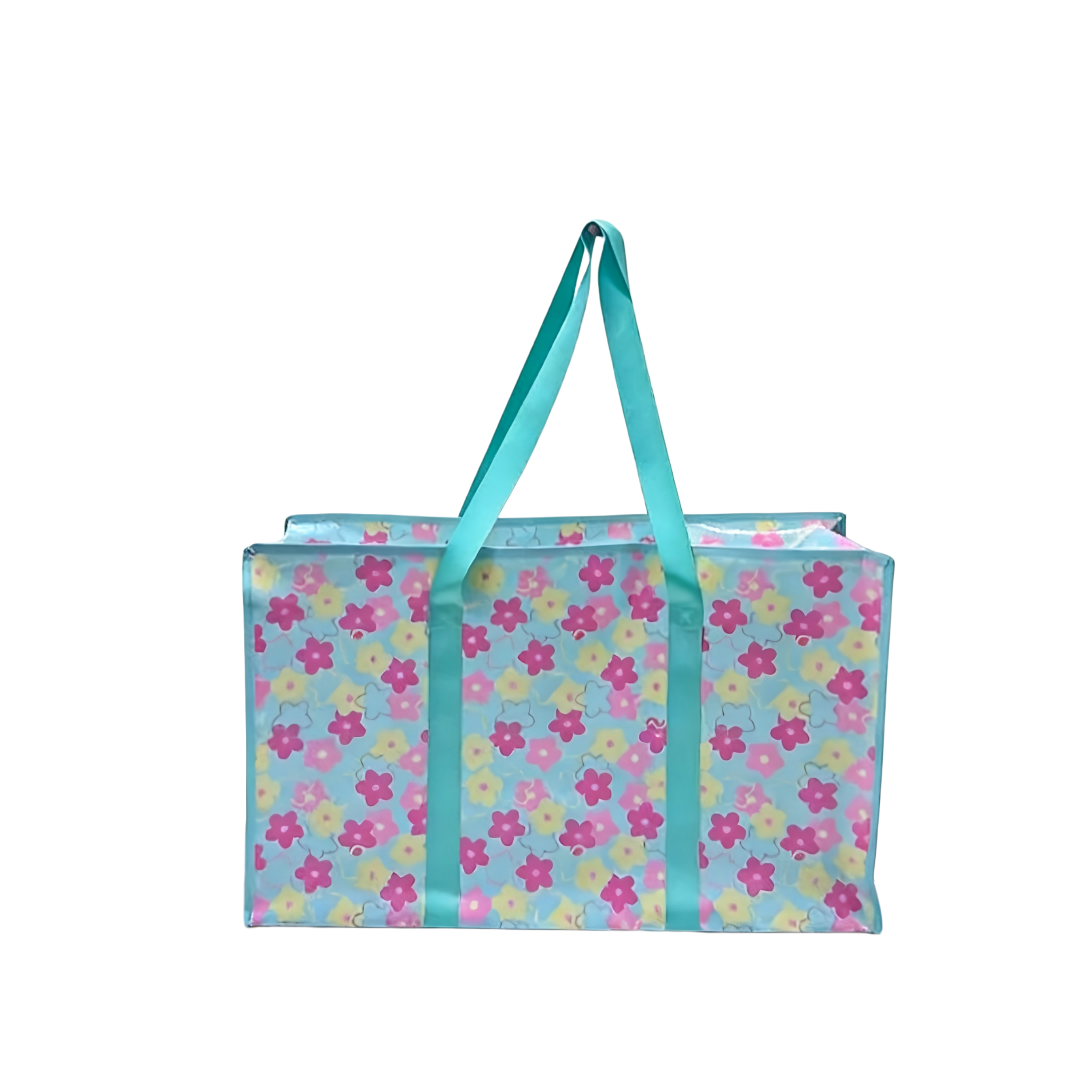
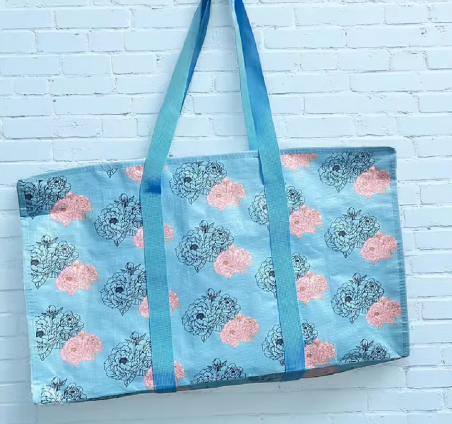
Because woven PP bags often carry heavy loads, handle design is critical. Options include self-fabric loop handles (cut from the same woven material), PP webbing straps sewn onto the bag, or die-cut handle holes in a reinforced hem. For the heaviest loads, webbing handles sewn across a wide area provide the most security.
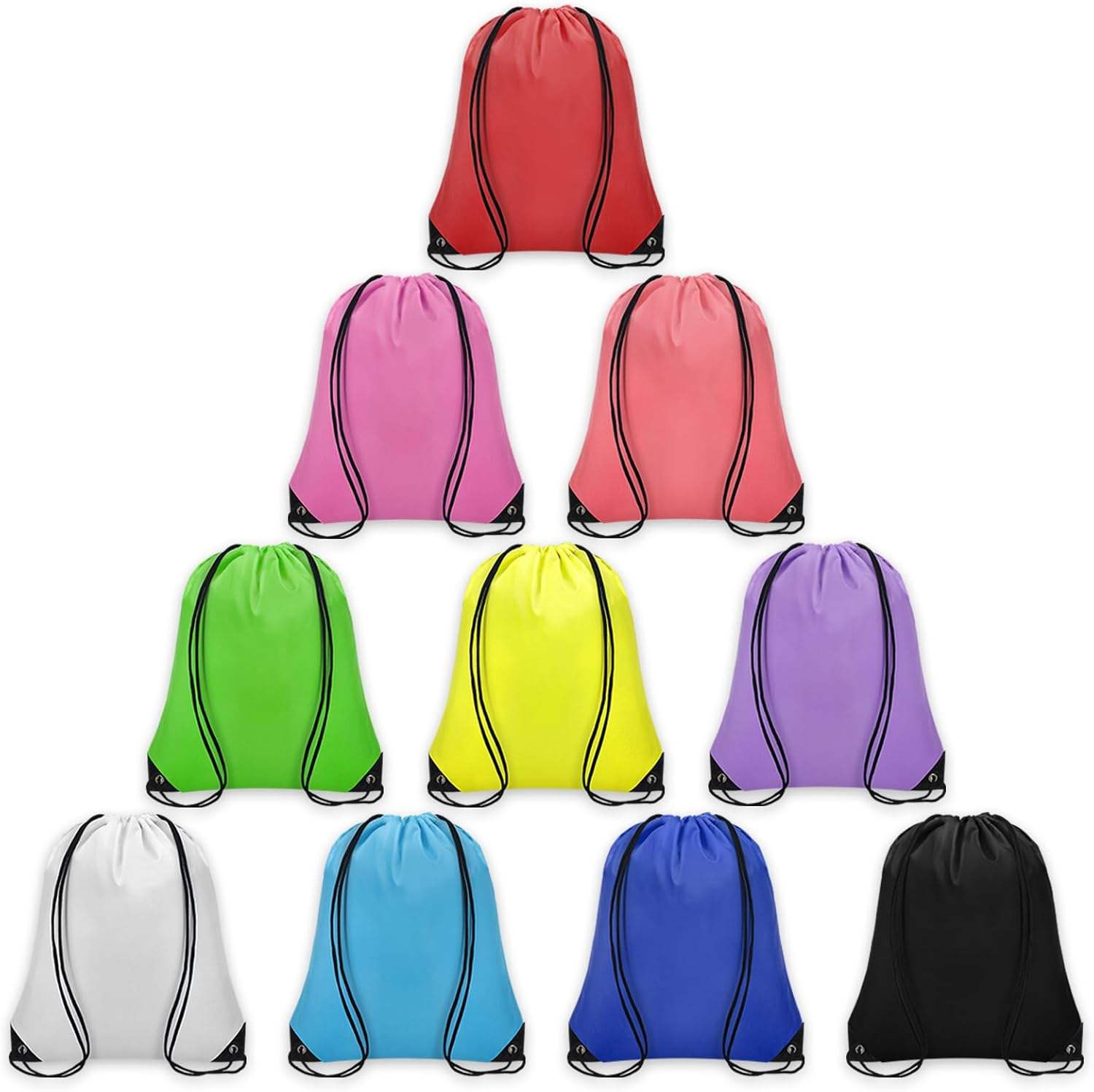
Closure options depend on the application. Open-top bags with reinforced hems are common for bulk loading. Zipper closures add security for retail products. Velcro strips allow repeated opening and closing. Drawstrings are used for gathered closures. Some industrial applications use heat-sealed closures for tamper evidence.
Application Scenarios for Woven PP Bags
Woven PP bags serve industries where non woven bags would fail:
Hardware and Home Improvement Stores
Nails, screws, tools, and building materials have sharp edges and heavy weight. Woven PP bags contain these items safely without tearing. Stores use custom-printed woven bags as reusable alternatives to single-use plastic.
Agricultural and Garden Centers
Seed, fertilizer, pet food, soil, and animal feed require bags that resist moisture, contain fine particles, and withstand stacking. Laminated woven PP bags meet all these requirements. Custom printing displays product information and branding.
Construction and Industrial Supply
Sand, gravel, cement, and debris need durable containment. Woven PP bags are used for both transport and storage. Many are designed for single use but can be reused. Our reusable versions are heavier-duty.
Bulk Retail and Warehouse Clubs
Large-format retailers selling items like charcoal, rock salt, or pet food in bulk quantities use woven PP bags. The bags must hold 20-50 pounds, resist punctures, and often be stackable.
Promotional and Event Merchandise
For events selling heavy items like books, merchandise, or promotional kits, woven PP bags provide a premium, durable alternative that recipients reuse for years. Custom printing with event logos creates lasting brand visibility.
Recycling and Waste Collection
Some municipalities use woven PP bags for curbside recycling collection because they are durable, breathable, and can be cleaned and reused.
How Our Manufacturing Process Ensures Quality Woven PP Bags
At Wenzhou Shuyou Packaging, we produce woven PP bags from extrusion through finishing. We start with high-quality polypropylene resin, which is extruded into tapes. These tapes are woven on high-speed looms to create fabric of specified denier and weave density. The fabric may then be laminated on one or both sides. Next, the fabric is cut to size, and bags are formed by sewing or heat-sealing the side seams. Handles, closures, and other features are attached. Finally, bags are printed using gravure for high-volume, high-quality graphics. Every bag undergoes visual and strength testing before shipment.
Our facility spans 6,000 square meters with 150+ employees, including dedicated quality control inspectors. We hold BSCI, ISO 9001, REACH, and OKET certifications.
Customization Options for Woven PP Bags
Fabric weight: From 70gsm to 200gsm or higher depending on strength needs
Lamination: None, single-side, or double-side; gloss or matte finish
Size: Custom dimensions; typical range from small parts bags to 50-pound capacity
Color: Natural (off-white) or custom colors; colored resin or printing
Printing: Gravure printing for high-quality, full-color graphics on laminated surface
Handles: Self-fabric loops, webbing straps, die-cut holes, or no handles
Closures: Open top, zipper, Velcro, drawstring, or heat seal
Gussets: Side gussets or bottom gusset for expanded capacity
Add-ons: Bottom insert, window panel, hang hole, custom labels
Sustainability of Woven PP Bags
Woven PP bags are fully recyclable at end of life. They can be ground and re-extruded into new polypropylene products. Their exceptional durability means they are reused many times before recycling, reducing overall material consumption. For businesses with sustainability goals, woven PP bags provide a practical solution for heavy-duty applications where disposable alternatives would generate more waste.
Our manufacturing processes are certified under BSCI and ISO 9001, and our materials meet REACH and OKET standards.
Global Service for Businesses Worldwide
Our foreign trade team provides 7×24 coverage across all time zones. Delivery timelines vary based on lamination and printing complexity; typical lead time for woven PP orders is 15-25 working days. We provide confirmed delivery dates before order placement.
 EN
EN
 ONLINE