The Art and Science of Custom Non Woven Bag Production
Creating a custom non woven bag that truly represents your brand requires expertise across multiple disciplines: material science, printing technology, construction techniques, and design principles. At Wenzhou Shuyou Packaging, we have spent over 18 years refining every aspect of this process, developing workflows that transform customer concepts into finished products with precision and efficiency.
The Customization Journey: Step by Step
Our custom non woven bag process follows a structured path designed to eliminate surprises and ensure satisfaction:
Step 1: Design Submission
You provide your artwork in AI, PDF, CAD, PSD, or high-resolution JPG/PNG format (300 DPI minimum). If you don’t have a design, our team can help create one based on your brand guidelines.
Step 2: Material and Size Selection
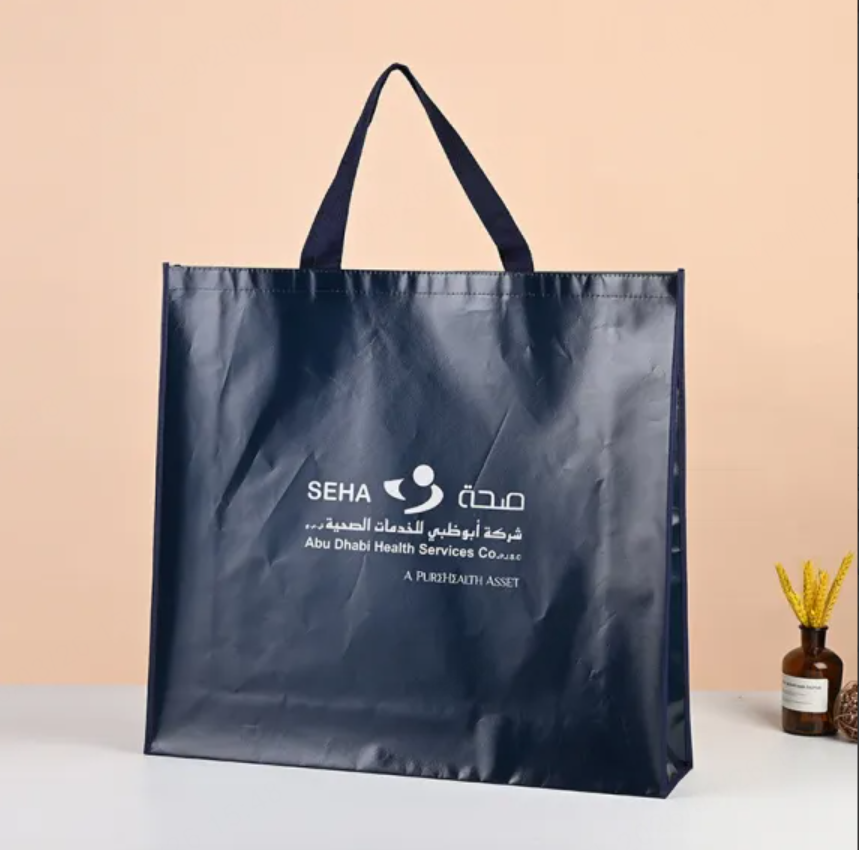
Choose from material options including standard non-woven, laminated non-woven (gloss, matte, or metallic), RPET (recycled), or PE. Specify dimensions—we offer standard sizes or custom measurements.
Step 3: Handle and Feature Selection
Select handle styles (self-fabric, PP webbing, cotton webbing, rope, or custom), closure options (open top, zipper, Velcro), and add-ons (pockets, bottom inserts, labels, grommets).
Step 4: Mock-Up Creation
Our design team creates a digital mock-up showing your design on the selected bag, including accurate color representation. You review and approve before production begins.
Step 5: Printing Method Selection
Based on your quantity, we recommend the optimal printing method: digital for small batches (100-5,000), gravure for high volume (5,000+), or screen printing for simple designs.
Step 6: Production and Quality Control
Production begins after approval. Our 150+ skilled workers operate 80+ sewing machines, 6 gravure presses, and digital printers across our 6,000 m² facility. Every bag undergoes 100% inspection.
Step 7: Delivery
Orders under 10,000 pieces ship within 5 working days; orders up to 20,000 pieces within 8 working days.
Understanding Printing Methods for Custom Non Woven Bags
Choosing the right printing method is critical to achieving your desired result at the right price:
Digital Printing (HP Indigo / UV)
Best for: Quantities from 100 to 5,000 pieces
Advantages: No plate costs, photographic quality, full-color reproduction, variable data printing, fast turnaround
Considerations: Higher per-unit cost than gravure for very large volumes
Ideal for: Promotional campaigns, seasonal designs, market testing, personalized bags
Gravure Printing
Best for: Quantities of 5,000+ pieces
Advantages: Lowest per-unit cost at scale, exceptional consistency, vibrant colors, durable print
Considerations: Plate creation costs (amortized over volume), longer setup time
Ideal for: Ongoing retail programs, large promotional runs, standard designs used repeatedly
Screen Printing
Best for: Simple designs with 1-4 colors, any quantity
Advantages: Durable, opaque prints, cost-effective for simple designs
Considerations: Each color requires separate screen, not suitable for photographic images
Ideal for: Logo-only designs, text-heavy layouts, budget-conscious projects
Material Options and Their Applications
The base material affects the bag’s appearance, durability, cost, and environmental profile:
Standard Non-Woven (Unlaminated)
Characteristics: Soft, breathable, lightweight, most economical
Best for: Promotional giveaways, light shopping, single-event use
Printing: Digital or screen printing recommended
Laminated Non-Woven (Gloss/Matte/Metallic)
Characteristics: Water-resistant, stiffer, more durable, vibrant print surface
Best for: Retail shopping bags, premium promotions, frequent reuse
Printing: All methods work well; gloss lamination enhances color vibrancy
RPET (Recycled PET)
Characteristics: Made from recycled plastic bottles, eco-friendly credential, similar to standard non-woven
Best for: Sustainability-focused brands, environmental campaigns
Printing: Digital or gravure
Handle Styles and Their Applications
Handles affect both functionality and brand perception:
Self-Fabric Handles (Same material as bag)
Best for: Cost-effective, lightweight applications
Characteristics: Soft, comfortable, less durable than webbing
PP Webbing Handles
Best for: Heavy loads, frequent use, retail applications
Characteristics: Strong, durable, professional appearance, available in custom colors
Cotton or Jacquard Webbing
Best for: Premium applications, luxury brands
Characteristics: Soft, comfortable, can be custom-woven with logos
Rope Handles
Best for: Casual, beach, or lifestyle brands
Characteristics: Natural appearance, comfortable for shoulder carry
Application Scenarios for Custom Non Woven Bags
Custom non woven bags serve diverse business needs:
Retail Store Checkout Programs
Retailers use custom non woven bags as branded checkout bags, replacing plastic while building brand visibility. High-volume gravure printing offers the best economics. Laminated bags provide the durability needed for repeated use.
Promotional Events and Trade Shows
Event organizers need custom bags that capture attention and provide utility. Digital printing allows small batches with full-color, event-specific artwork. Lightweight non-woven keeps shipping costs low.
Corporate Gifting and Employee Recognition
Companies use custom non woven bags as gift bags for employees or clients. Premium options like laminated finishes, custom handles, and interior pockets elevate perceived value.
Nonprofit and Fundraising Campaigns
Nonprofits use custom bags to thank donors or sell as merchandise. RPET material aligns with environmental missions. Inspirational printing tells the organization’s story.
Product Launches and Seasonal Promotions
Brands launching new products or seasonal campaigns need packaging that stands out. Digital printing’s no-plate-cost model makes short-run, high-impact designs economical.
How Our Manufacturing Capabilities Support Custom Orders
At Wenzhou Shuyou Packaging, our manufacturing infrastructure is designed to handle custom orders of any size with precision and efficiency.
Our facility spans 6,000 square meters and employs more than 150 skilled workers, including 20+ designers who assist with artwork preparation. Production equipment includes six gravure printing machines for high-volume custom orders, two HP Indigo digital printers and two UV printers for small-batch customization, three laminators for material finishing, five cutting machines for precision sizing, and 80+ sewing machines for assembly.
Every custom order undergoes 100% inspection before shipment, verifying print quality, seam integrity, handle attachment security, and dimensional accuracy.
Common Design Mistakes to Avoid
Our experience has identified common pitfalls in custom bag design:
Low-Resolution Artwork: Images below 300 DPI print blurry. Always provide high-resolution files.
Missing Bleed Area: Designs that extend to the bag edge require bleed (extra image extending beyond trim line). We provide templates with bleed specifications.
Incorrect Color Mode: RGB colors may shift in production. Convert to CMYK for accurate color reproduction.
Oversized Text: Text below 6 points may be illegible after printing on textured non-woven fabric.
Ignoring Material Characteristics: Dark designs on dark bags have low contrast. Consider how your design interacts with the bag color.
Our design team helps you avoid these issues before production begins.
Global Service for Custom Orders Worldwide
Our foreign trade team provides 7×24 coverage, ensuring prompt responses across time zones. Delivery timelines support custom order planning: orders under 10,000 pieces ship within 5 working days, orders up to 20,000 pieces within 8 working days.
 EN
EN
 ONLINE